Built for PS5 & Xbox · Prototypes done · Kickstarter coming soon
Rig hardware for console racers.
No PC. No SimHub.
Pixra reads the telemetry your PS5 or Xbox already broadcasts and drives the whole rig by itself — race display, shift lights, LED matrix, seat shaker and wind.
- Demo
- simulated lap
- Gear
- 3
- RPM
- 8,450
- Speed
- 182 km/h
- Flag
- —
The console problem
The accessories exist. They all assume a PC you don't have.
SimHub is brilliant, and it is the reason nearly every rig accessory works. It is also a Windows program. If you race on a console, that leaves you two bad options and one good one.
The workaround
- A Windows PC or laptop wedged under the rig, on just to run SimHub
- SimHub, its plugins, its drivers and its updates to keep working
- A USB cable from that PC to every accessory
- Fifteen minutes of setup before every session
Going without
- No shift lights, no flags, no wind, no feel
- Telemetry the game is already sending, going nowhere
- A phone-app dashboard that lags and needs charging
- A rig that looks the part and feels like a TV
Pixra
- The DDU listens to the console over Wi‑Fi. That is the whole setup.
- Matrix, shaker and wind pair to the DDU, not to a computer
- Design dashboards and effects from your phone's browser
- Turn it on, start the game, race
How it works
Three steps. None of them involve a PC.
-
1
Switch on UDP telemetry
Every supported game has it in its settings. F1 calls it UDP Telemetry, Forza calls it Data Out, Gran Turismo 7 just needs to be asked.
-
2
The DDU joins your Wi‑Fi
Type the password on its own touchscreen. From then on it listens for whichever game is running and switches dashboards to match.
-
3
Accessories pair to the DDU
Matrix, shaker and wind units announce themselves and talk to the DDU over its own radio link, not through your router, so a busy house network never adds lag.
Nine dashboards, out of the box
Pick one on the touchscreen. Or build your own.
Every one below is drawn on the DDU itself from live telemetry. Eight are 1:1 transcriptions of dashboards the sim racing community already knows from SimHub, running with no SimHub anywhere near them. Tap to switch, swipe for the next screen.
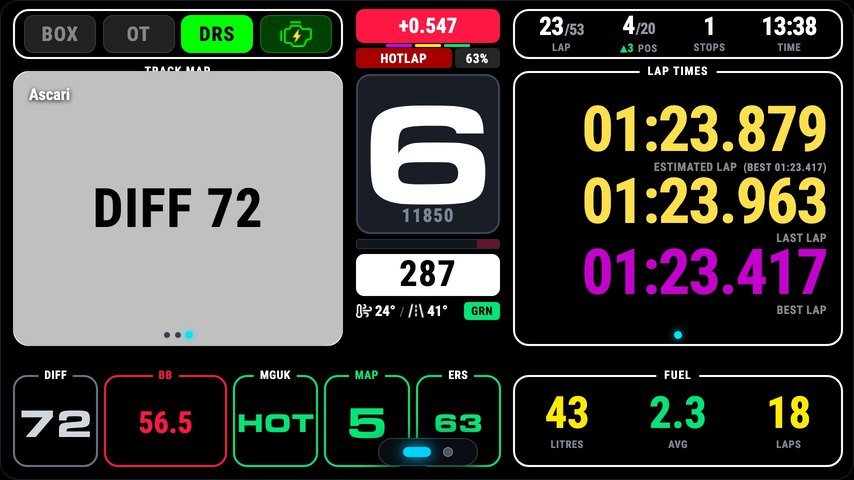 Lovely StandardRace · Qualifying · Tyres
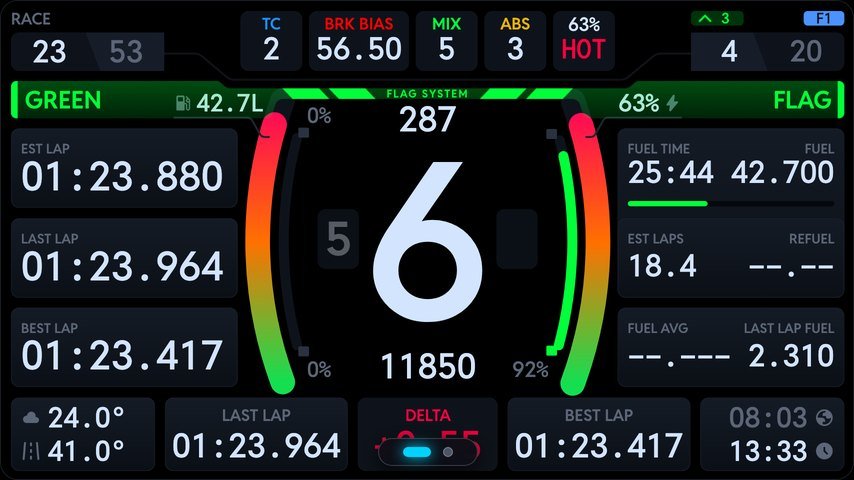 DNR Endurance13 MFD cards per side
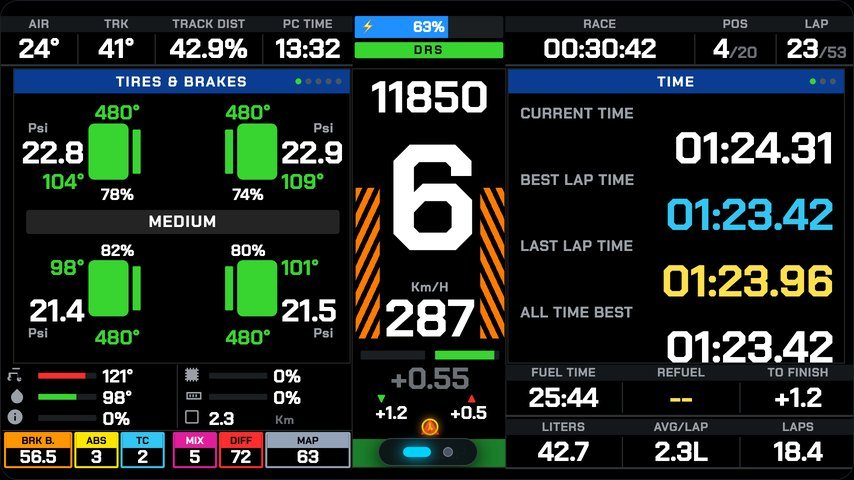 AIOEverything on one page
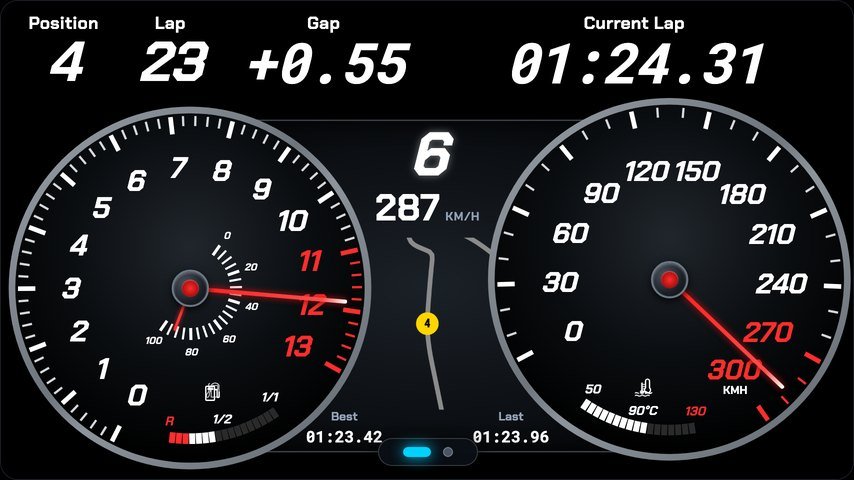 Audi ConceptTwin dials, live map
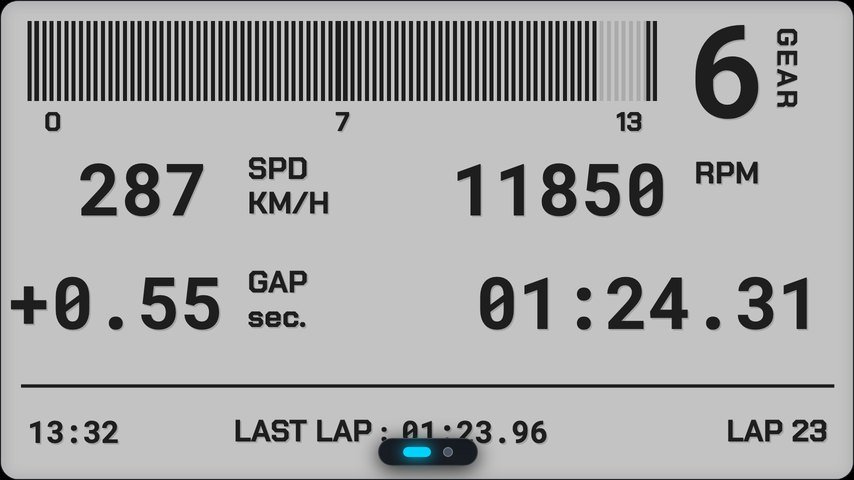 AIM GS‑DASHMotorsport LCD
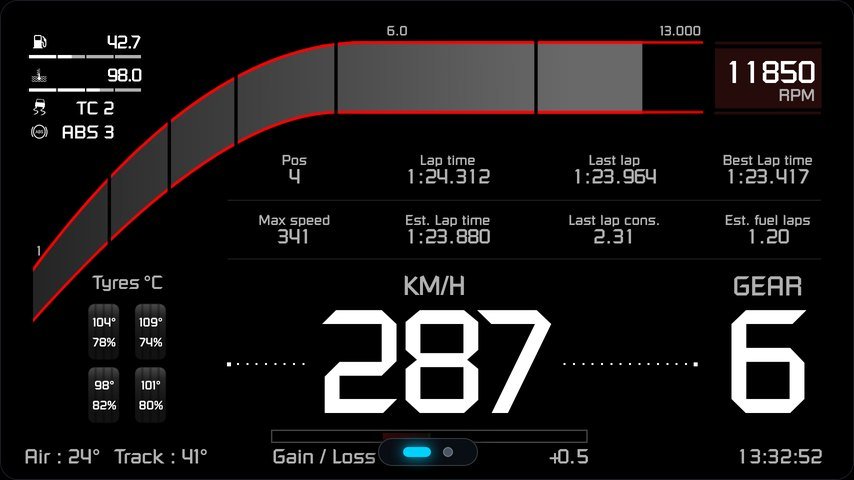 Ford GTRev swoosh, fuel & water
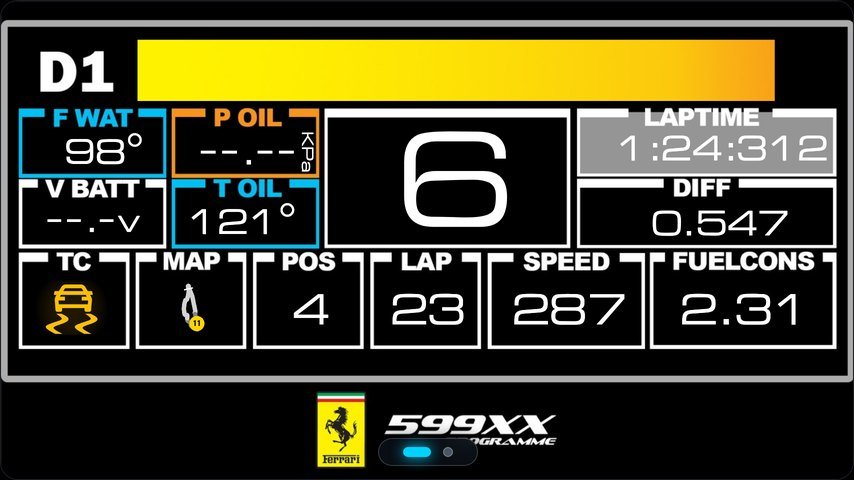 Ferrari 599XXFour screens
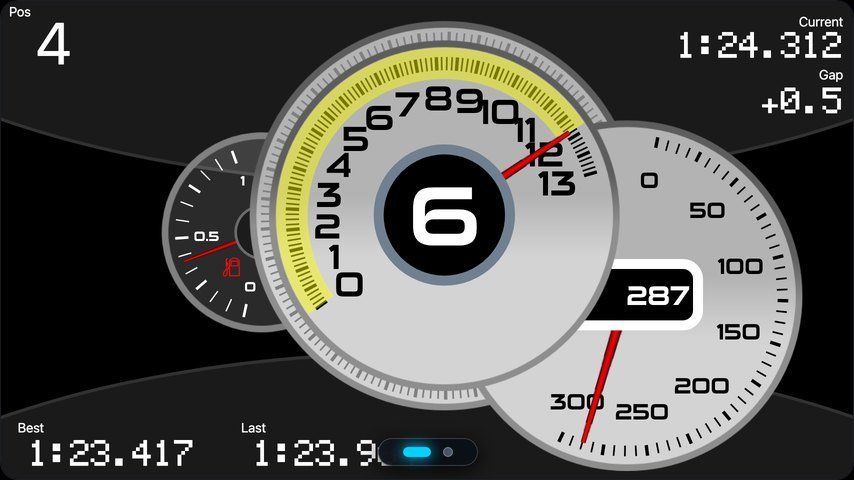 GaugeLandMoTeC‑style dials
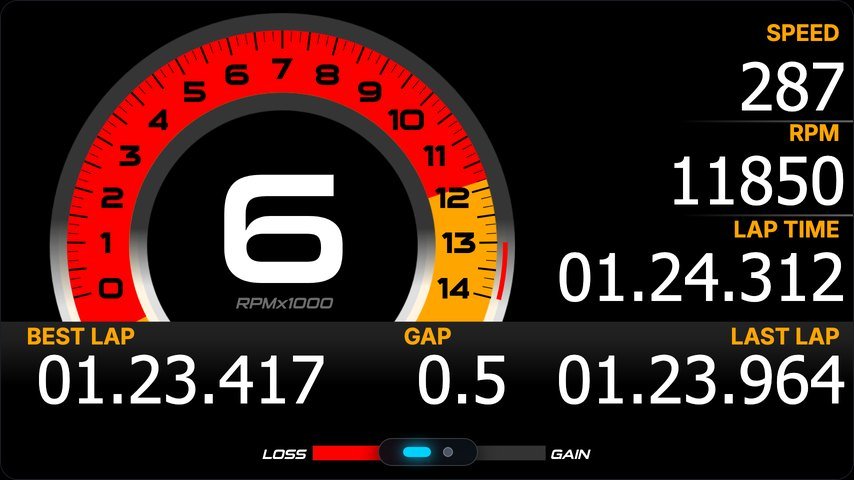 MYTECTacho with live redline
ESP‑NOW · The link
Every accessory is wireless. None of them go through your router.
The matrix, the shaker and the wind units talk to the DDU over ESP‑NOW, a direct radio link between the DDU's own dongle and each unit. No access point, no Wi‑Fi retries, no lag from whoever is streaming in the next room: a frame leaves the DDU and lands on the unit in under 3 ms.
- Pair once, from the DDU. A new unit is found over Bluetooth, handed its settings, and never needs a computer.
- Nothing to configure on your network. The DDU is the only thing on your Wi‑Fi. Change routers and the accessories don't notice.
- Fails safe, fast. The matrix blanks within 0.5 s of silence, the shaker goes quiet within 1 s, the fans stop. A stale flag or a rumble with no game behind it never happens.
- Add another. Units announce themselves. A second matrix or a third fan needs no setup at all.
Make it yours
Five designers. Any browser. No install.
Every editor runs on the DDU and opens on your phone or laptop from a QR code on its screen. Change something, it's on the hardware before you've put the phone down.
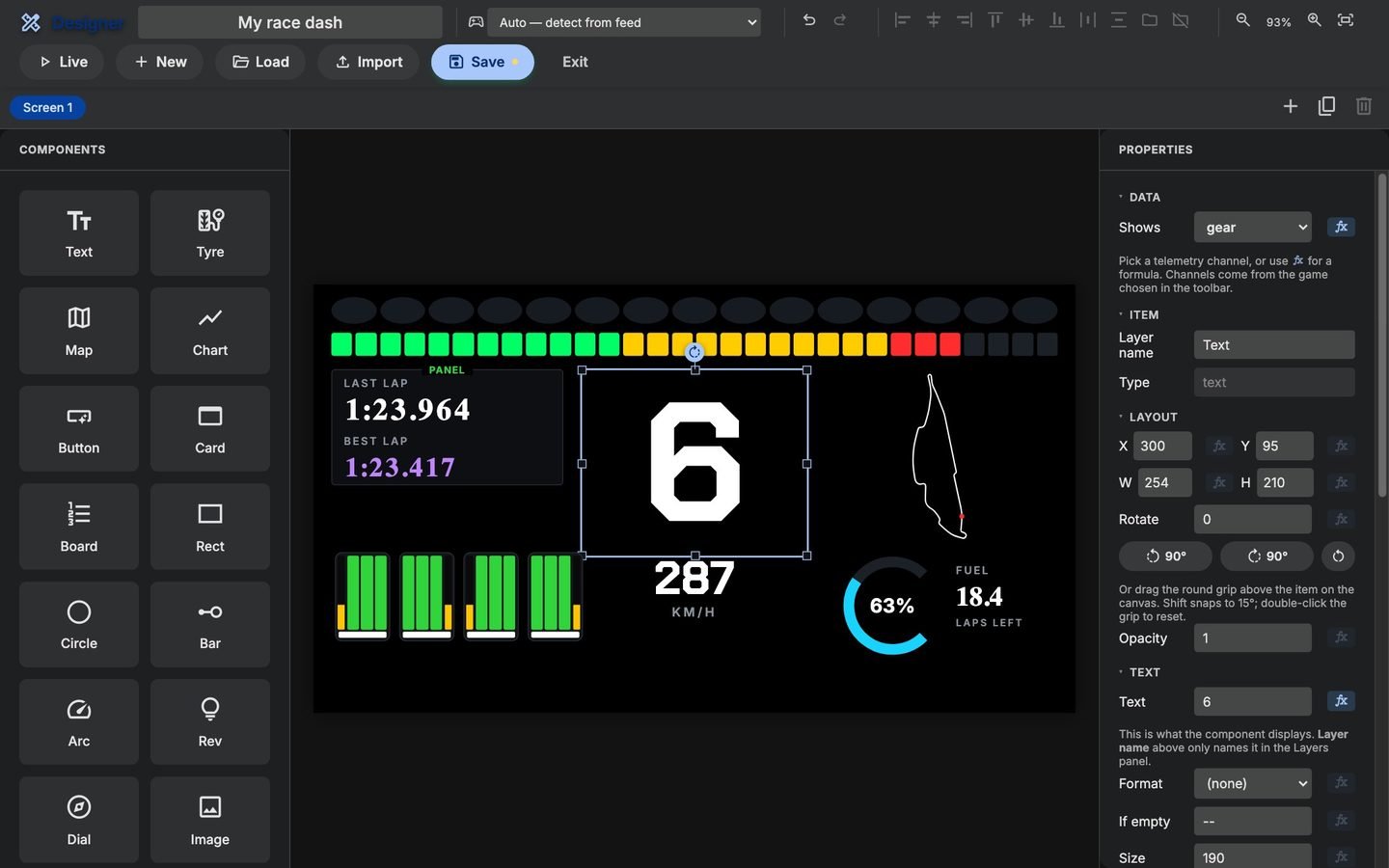
Dashboard designer
Drag text, gauges, rev bars, shift lights, tyres, track maps, charts and standings onto an 854 × 480 canvas that is exactly the DDU's screen. Bind anything to any telemetry channel, or write a formula. Multiple screens per dashboard. Import a .simhubdash and keep the layout you already love.
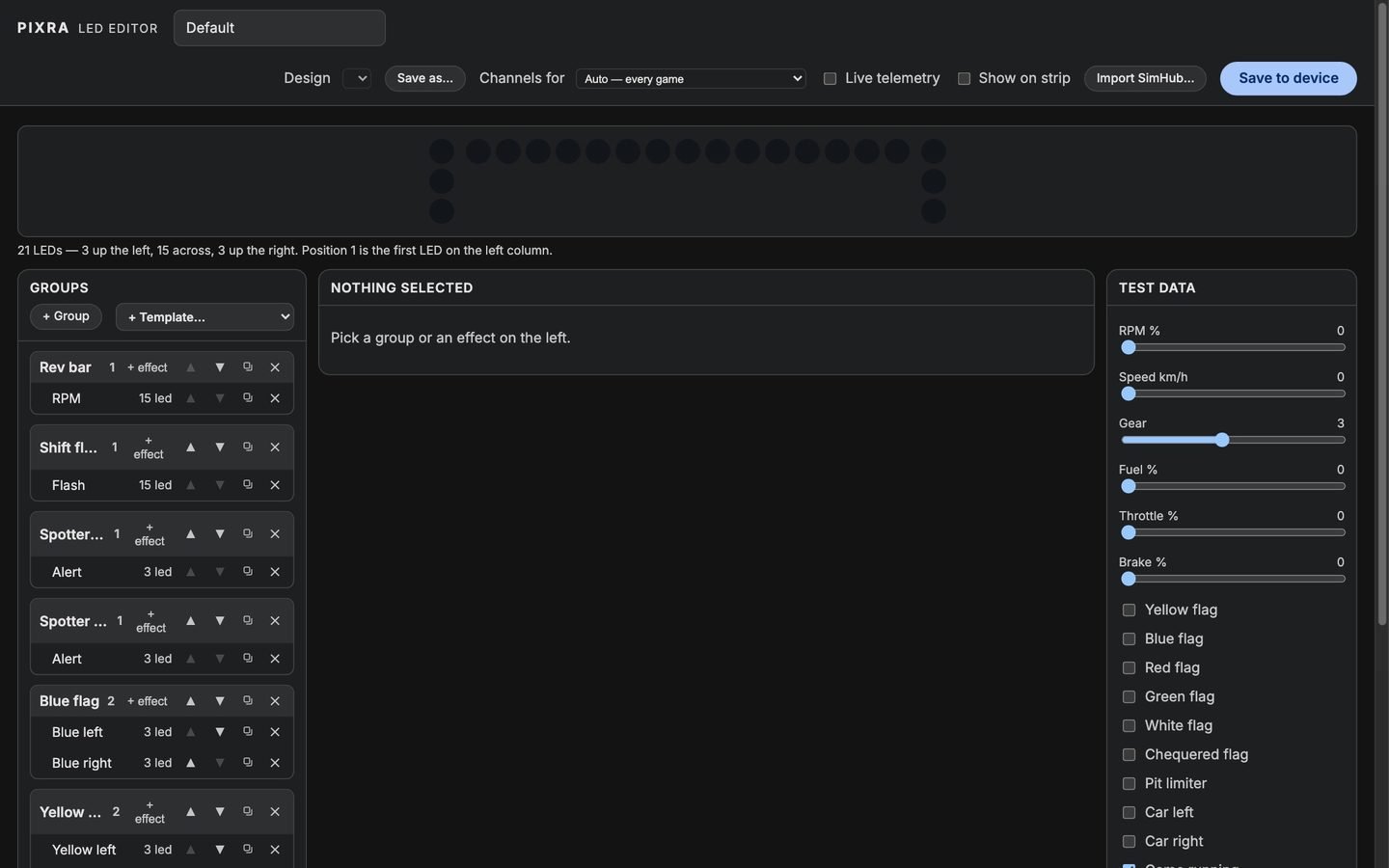
Shift lights
All 21 LEDs, group by group: rev bar colours and thresholds, flags on the end blocks, spotter, pit limiter, blink rates. Test it against sliders before you ever start a game. Imports SimHub LED profiles.
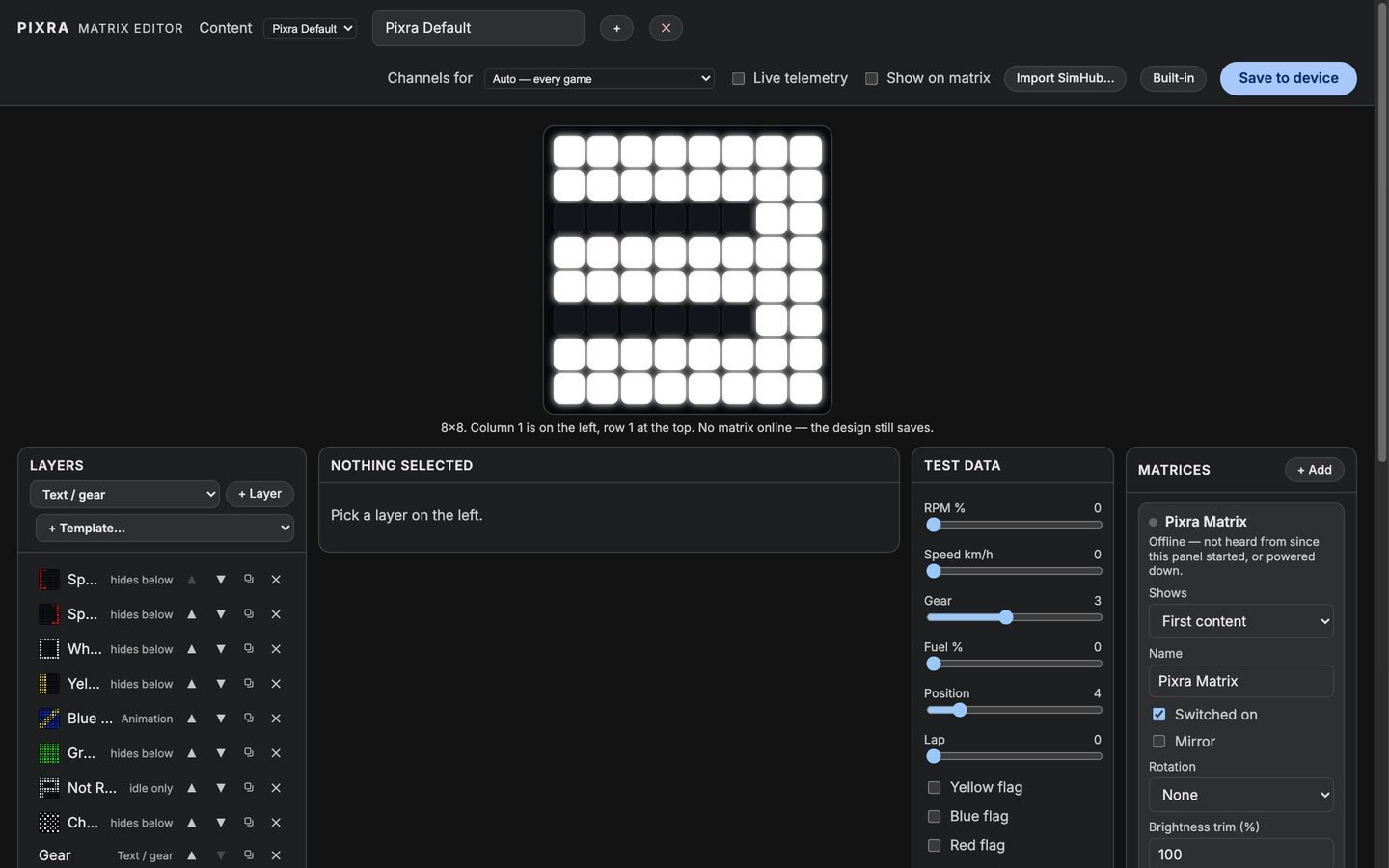
LED matrix
Draw what each unit shows, layer by layer: gear, flags, animations, text that scrolls. Conditions per game, so an F1 blue flag and a Forza one can look different. Live preview on the real unit.
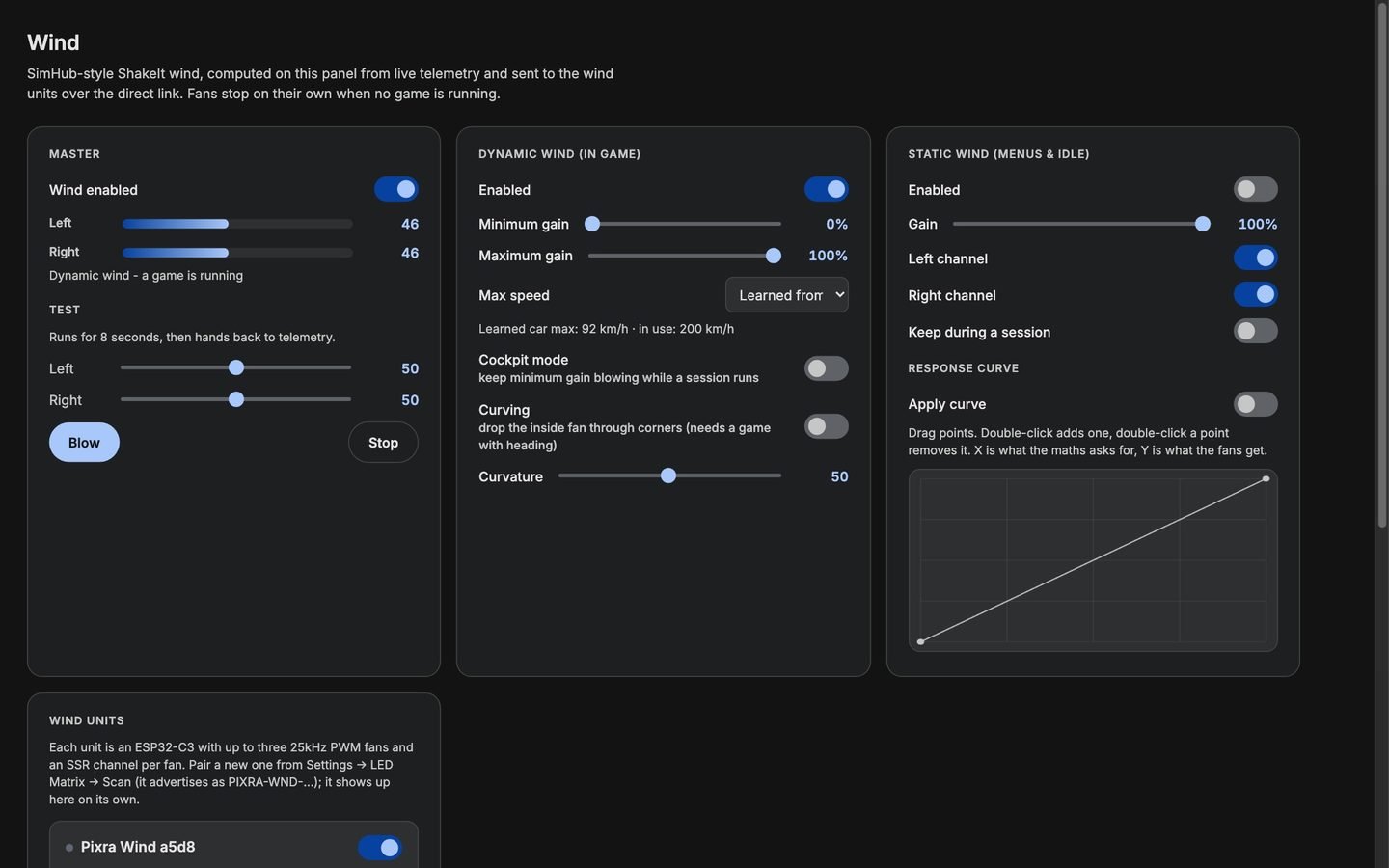
Wind tune
Minimum and maximum gain, the speed the car tops out at (or let it learn), corner curving, static wind for the menus, and a response curve you drag by hand. A test blast for finding the level.
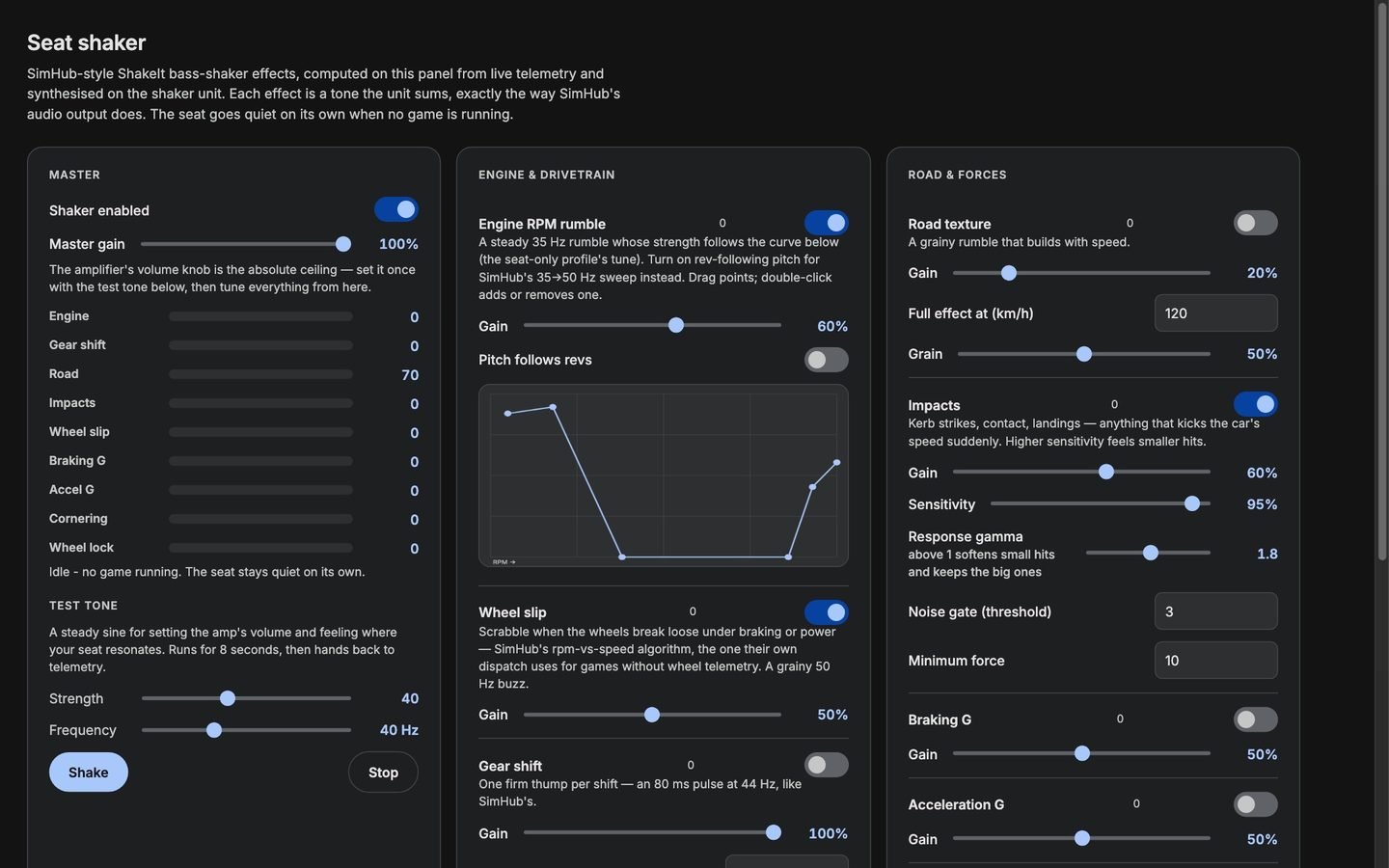
Seat shaker tune
Engine rumble with its own RPM curve, gear shift, road texture, impacts, wheel slip, braking G, acceleration G, cornering: gain and character for each. A test tone to set the amp once.
Over‑the‑air updates
It gets better after you buy it.
- The DDU updates itself. New dashboards, new games, new effects: one tap on the Updates page, no SD card, no computer.
- It cannot brick. Updates land in a second slot and the DDU only switches over once the new version has booted and proved itself. If it doesn't, it rolls back on its own.
- Accessories too. The DDU pushes new firmware to every matrix, shaker and wind unit over the air. You will never plug one into a laptop.
Under the hood
Proper parts, named.
No mystery boards. Everything in a Pixra is a component you can look up, and the firmware for all of it is ours.
Pixra DDU
- Radxa Zero 3Wquad‑core RK3566, runs the dashboard and every designer
- VoCore 5" display800 × 480 IPS, capacitive multi‑touch, USB‑C
- ESP32‑S3the ESP‑NOW radio that talks to every accessory
- 21 × WS2812B15 rev lights, 3 + 3 flag / spotter blocks
LED Matrix
- ESP32‑C3ESP‑NOW, Bluetooth pairing, OTA
- 8 × 8 WS2812B matrix64 pixels behind a diffuser
- Tilt bracketprofile or clamp mount, USB‑C power
Seat Shaker
- Dayton Audio BST‑235 W, 4 Ω bass shaker in a printed enclosure with a universal post clamp (up to 45 mm) and mounting feet
- ESP32‑C3synthesises the tones itself: up to 4 per channel
- TPA3116D2 class‑D amplifier24 V rail, input caps swapped so 10 – 50 Hz gets through
Wind Simulator
- 2 × 120 mm fans, 110 CFM4‑pin PWM, ducted to blue anodised outlets
- ESP32‑C325 kHz PWM, inaudible; up to 3 fans per unit
- 12 V supplyUSB‑C for the controller
01 · Pixra DDU
A real race display, not a phone in a bracket.
A 5-inch capacitive touchscreen with twenty‑one RGB LEDs in an anodised aluminium housing: fifteen rev lights across the top, flag and spotter blocks down each side. A Radxa Zero 3W inside draws the dashboard itself, at 60 frames a second, from the game's telemetry.
- Dashboards you design in a browser by drag and drop, or import from the SimHub library.
- Track maps it learns from your own laps, so every circuit works from lap two.
- Three swipeable screens: race, qualifying, tyre strategy.
- Updates itself over the air. Rolls back on its own if an update fails.
- Display
- VoCore 5.0" IPS, 800 × 480, multi‑touch
- Brain
- Radxa Zero 3W + ESP32‑S3 radio
- Telemetry in
- UDP over Wi‑Fi, auto‑detects the game
- Updates
- Over the air, with automatic rollback
Inside the DDU
Scroll to open it up.
The actual CAD, not an illustration. Anodised housing, the VoCore panel, a Radxa Zero 3W doing the drawing, a XIAO ESP32‑S3 talking to the accessories, and a fan so it never throttles mid‑race.
02 · Pixra LED Matrix
Flags, gear and warnings, big enough to see without looking.
An 8 × 8 wireless pixel panel you mount wherever your eyes already go. Yellow flag, blue flag, pit limiter, the gear you're in: the DDU renders every frame and the matrix just shows it.
- Design what it shows, per game and per condition, in the same browser designer.
- Wireless. Pair it once from the DDU and it sits anywhere on the rig, under 3 ms behind the game.
- Add a second or third one. No extra setup, they announce themselves.
- Blanks itself within half a second if the feed ever drops, so a stale flag never sits on your rig.
- Pixels
- 8 × 8 WS2812B matrix on an ESP32‑C3
- Link
- ESP‑NOW to the DDU, under 3 ms
- Pairing
- Bluetooth from the DDU, once
- Power
- USB‑C, 5 V
03 · Pixra Seat Shaker
Feel the engine, the shift, and the lock‑up.
A Dayton BST‑2 bass shaker in our own printed enclosure that clamps to any seat post up to 45 mm, or bolts flat through its mounting feet. Driven by tones the DDU synthesises from the telemetry, the same family of effects PC racers get from ShakeIt, with no PC in the loop.
- Engine rumble that climbs with revs. A thump on every gear change.
- Wheel lock, road texture, kerb impacts, braking and lateral G.
- Tune every effect from your phone. Test tone included.
- Transducer
- Dayton BST‑2, 35 W, TPA3116 class‑D amp
- Range
- 10 – 50 Hz, ESP32‑C3 tone synth, 4 tones per channel
- Link
- ESP‑NOW to the DDU, under 3 ms · 60 Hz effects
- Safety
- Goes silent 1 s after the feed stops
Right now 42.0 Hz 64 %
04 · Pixra Wind Simulator
Speed you can feel on your face.
Two blower fans on flexible ducts, so the outlets sit exactly where you want them. Wind rises with speed, and the inside duct eases off through corners, so a fast left feels different from a fast right.
- Speed-proportional, learns each car's top speed as you drive.
- Corner-aware left / right channels.
- Silent 25 kHz fan control. Your response curve, drawn by hand.
- Fans
- 2 × 120 mm, 110 CFM, ducted (up to 3 per unit)
- Controller
- ESP32‑C3, 30 Hz updates
- Link
- ESP‑NOW to the DDU, under 3 ms
- Power
- 12 V for the fans, USB‑C for the controller
Right now L 48 % R 48 %
Kickstarter
Be first on the grid.
The prototypes are finished: everything on this page is running hardware, not a render of a plan. Kickstarter is next, and backers get their units 45 – 60 days after the campaign ends. Waitlist members get the early‑bird tier before it goes public, and nothing else — no newsletter, no spam.
- PrototypesFinished. DDU, matrix, shaker and wind all on the rig.
- KickstarterLaunching soon. Waitlist gets the early‑bird tier first.
- Shipping45 – 60 days after the campaign ends.